


Low Milk Production
- Updated
What determines how much milk I will make?
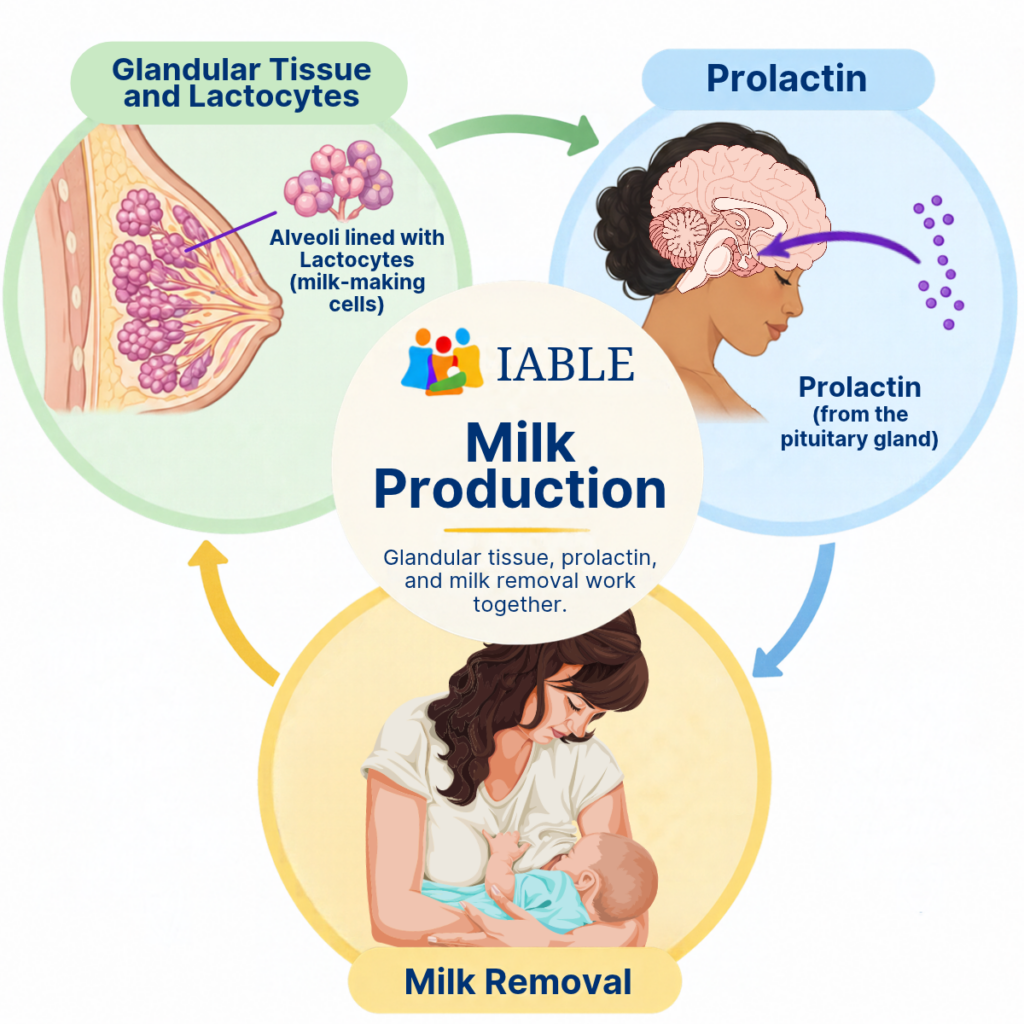
There are three main drivers of milk production, and they work together to determine the rate at which milk is made.
Glandular Tissue
During pregnancy, certain cells in the breast grow into milk-making cells called lactocytes. Areas of the breast that have lactocytes and produce milk are called “glandular tissue.” The amount of glandular tissue differs from person to person.
The amount of glandular tissue determines the rate that milk is made, meaning the number of ml or ounces of milk that are produced each hour. Some women can produce 1 ounce (30ml) of milk per hour, while some may be able to produce 2 ounces (60ml) of milk per hour. Some people have low amounts of glandular tissue, possibly related to breast surgery, genetic predisposition, or hormonal imbalances that we don’t yet entirely understand.
Prolactin
Prolactin is the hormone that controls the rate of milk production. Prolactin signals the lactocytes to make milk. When breastfeeding or pumping become less frequent, the prolactin level will drop, and the lactocytes will not receive the message to keep milk production going. This leads to less milk produced.
Prolactin only rises with direct nipple stimulation. If the nipples don’t feel a baby or a pump, prolactin will drop. Because prolactin doesn’t stay in the bloodstream for very long, it requires frequent stimulation (as often as every 3 hours or so) to keep it elevated.
Milk Removal
When milk removal does not happen regularly, milk production will slow down. For example, when milk removal becomes less frequent, such as nursing every 4 hours rather than every 2 hours, the breasts become full, and this fullness will signal to the lactocytes to slow down on milk production.
Putting the three together, the prolactin hormone and milk removal control the rate of milk production. The amount of glandular tissue determines the amount of milk that can potentially be made and how long it takes until a breast feels “full.”
How much milk do I need to make?
While social media has people believe that they need a freezer full of milk, we only need to make the amount of milk our baby needs to grow and be healthy. It is common for lactating people to perceive that they have low milk production when it is, in fact, perfectly normal production for their baby. It helps to understand the typical volumes of milk that babies drink over time.
- The first few days: During the first few days postpartum, lactating parents produce small volumes of milk called colostrum. Colostrum is low in volume (as little as 5-7 mL (1-1.5 teaspoon) per feeding on the first day of life), and it is packed with important substances that protect the baby from infection, nourish the baby, and mature the gut lining.
- The first month: During the first 4-6 weeks, the volume of milk that a baby requires rises rapidly. While a newborn may only need ½ oz (15 mL) of milk per feeding on day 2, a full-term healthy infant often requires 1.5-2 oz (45-60ml) per feeding by day 5. By the time they are about one month old, babies will take about 3-4 oz (90-120 mL) per feed.
- The first year: By 4-8 weeks, babies hit their maximum milk intake per 24-hour period. Most babies take between 24 – 30 oz (720-900 mL) per day, and this amount stays relatively stable through the first year of life. As metabolic rates change and eventually other types of foods are added, babies require about the same volume of milk every day until about 9 months. Assuming babies are eating 3 well rounded meals with snacks at 9 months, their milk intake often declines to 16-20 oz (480-600ml) each day.
What to Do If You Are Worried about Milk Production
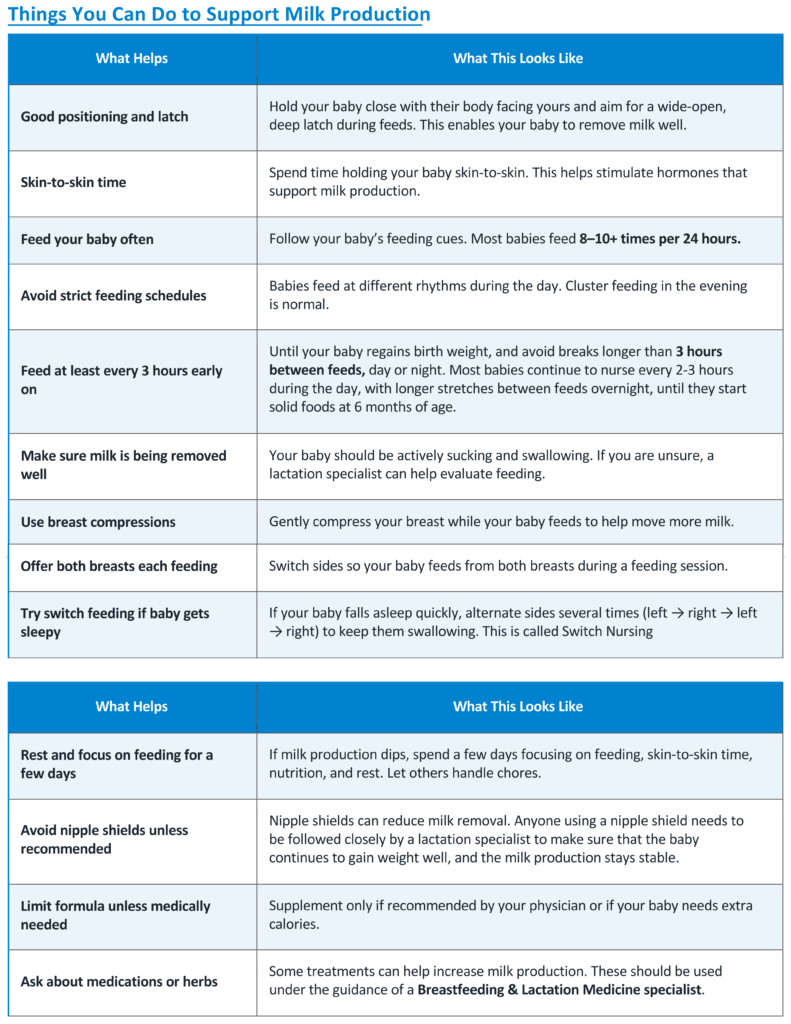
Monitoring your baby’s weight is the best way to know if they are getting enough milk. Typically, babies will lose weight during the first 3 days of life and then transition to gaining weight daily, with a return to birth weight by about 10-14 days of life. After that, most babies will gain an average of 5 to 7 oz (150 to 210 grams) per week during the first 4 months. The rate of weight gain per day slows after 4 months of age. Wet and soiled diapers are not an appropriate measure of infant weight gain.
Your doctor will check on infant growth at well-child exams. Whenever you are concerned about your baby’s intake or weight gain, contact your baby’s doctor for a weight check.
Contact Your Provider If You Have Concerns About Your Baby’s Intake or Weight Gain.
- Proper growth can never be fully assessed on the phone.
- Wet and soiled diapers are not measures of adequate weight gain. They only indicate hydration.
- Weighing the baby on an accurate infant scale is critical to ensure proper growth.