
Nutrition While Lactating
- Updated
Most people do not need a special diet while making milk. A varied diet can support your health and help provide key nutrients for your baby at the same time. What you eat does not have to be perfect for your milk to be nutritious.
A Practical Plan for Eating
Choose foods you enjoy from several groups over the course of the day. Your meals and snacks might include:
- Fruits and vegetables in different colors
- Whole grains, such as oats, brown rice, whole wheat bread, or corn
- High protein foods, such as eggs, fish, poultry, meat, beans, lentils, tofu, nuts, or seeds
- Dairy foods or fortified alternatives, if you use them
- Healthy fats from foods such as olive oil, avocado, nuts, seeds, and fish
Good to Know
Milk production uses extra energy, but hunger varies. Eating regularly and drinking when you are thirsty are usually better guides than following a rigid meal or fluid schedule.
Nutrients That Need Extra Attention
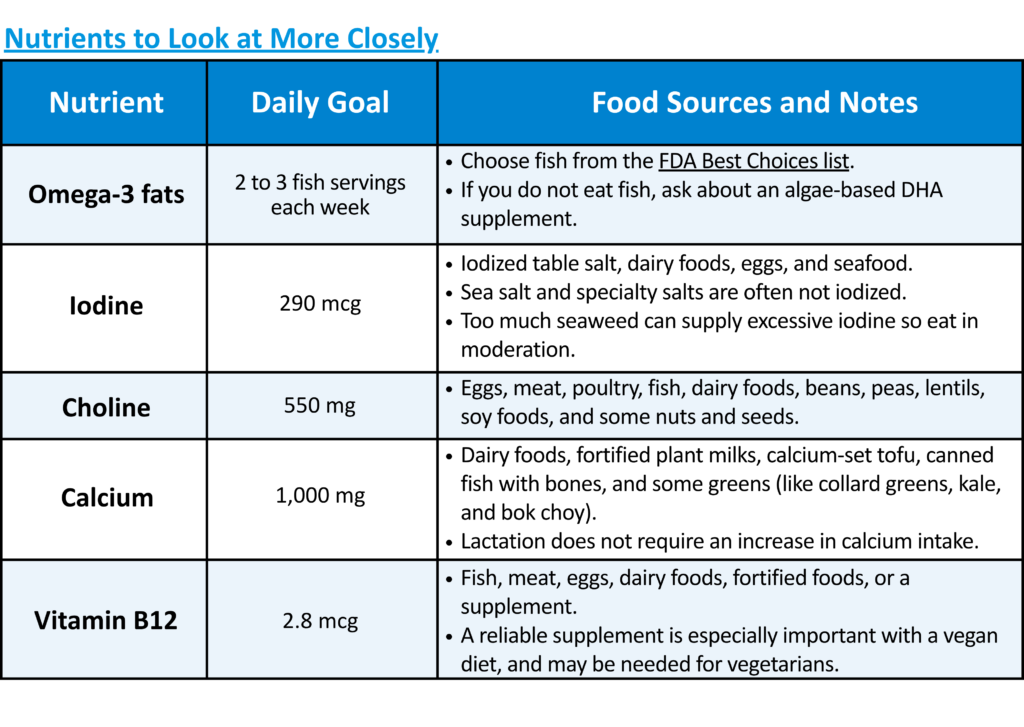
Some nutrients in human milk are more affected by what you eat or by your vitamin levels. The goals below are for most healthy adults during lactation.
Common Questions
Do I need more calories?
Most people need about 330 to 400 extra calories a day during lactation. Your needs may be higher or lower depending on your body, activity, how much milk you make, and whether you are also pregnant. Appetite is often a useful guide.
How much water or fluids should I drink?
Drink when you are thirsty and keep water nearby when feeding or pumping. While sufficient water intake is important for milk production, forcing large amounts of fluid does not increase milk production and can make you uncomfortable. You know you have the right amount of fluid intake if your urine appears light yellow and you are peeing every 3-4 hours during the day.
What about caffeine?
Up to about 300 mg of caffeine a day is usually compatible with lactation. This is roughly two to three cups of coffee, depending on the size and how it is brewed. Caffeine is also found in tea, soda, energy drinks, chocolate, and some medicines. If your baby seems unusually restless or has trouble sleeping after you drink something with caffeine, try cutting back.
Should I avoid foods to prevent allergies?
Avoiding common allergens such as peanuts, eggs, dairy, or wheat during pregnancy or lactation has not been shown to prevent food allergies in children. Do not remove major food groups unless you have an allergy yourself or your baby has a suspected reaction. Talk with your child’s physician or other provider before starting an elimination diet. See the IABLE handout on Food Elimination While Breastfeeding for more information.
Does my baby need vitamin D?
Babies who are breastfeeding or fed human milk need 400 IU of vitamin D each day beginning soon after birth. Vitamin D is vital for bone and immune health. For babies who are also receiving formula, they would not need vitamin D supplementation if they are taking at least 17 oz (500ml) of formula each day.
Some mothers prefer to take high dose vitamin D rather than supplement the baby. Although there is research showing that this is possible, there is no current calculator to know how much vitamin D an individual mother needs for their baby. The vitamin D dose will vary depending on the mother’s health history, other medications, and body weight. Even if the mother is on vitamin D for her own health, it is still safe and recommended to give vitamin D to the breastfed infant. See the IABLE handout on Vitamin D for the Human Milk-Fed Baby for more information.
Are artificial sweeteners OK while breastfeeding?
Most artificial sweeteners do not transfer into human milk in high enough amounts to cause problems, though we have limited information on some. As with other artificial ingredients, eat and drink these in moderation.
Special Diets, Supplements, and Weight Loss
- Vegetarian or vegan diets. Plan reliable sources of vitamin B12, DHA, iodine, choline, vitamin D, iron, protein, and calcium. A registered dietitian can help you build a balanced plan.
- Very low carbohydrate or ketogenic diets. Strict ketogenic diets during lactation increase the risk of dangerous ketoacidosis (a state when your blood is dangerously acidic), especially during illness, fasting, or rapid weight loss. These diets are not recommended while lactating.
- Weight loss. Gradual weight loss of 2 lb (1 kg) each month is safe during lactation and should not impact milk production. Restrictive diets may leave you tired, short on nutrients, and may reduce milk production.
- Vitamins, herbs, and supplements. More is not always better. Products marketed for milk production may cause side effects or interact with medicines. Review high-dose vitamins and all herbal products with your physician or other provider.
When to Reach Out for Help Regarding Nutrition during Lactation
Reach out to your physician or other provider if you…
- Follow a vegan diet or another diet that removes several food groups
- Have anemia, a vitamin deficiency, history of weight loss surgery, diabetes, kidney disease, digestive disease, food allergies, or a history of an eating disorder
- Are losing weight quickly, have poor appetite, or have trouble getting enough food
- Are gaining weight unexpectedly
- Are worried that a food is causing blood in your baby’s stool, repeated vomiting, poor growth, hives, swelling, wheezing, or another symptom in your baby
- Are caring for a baby who was born preterm or has special medical needs
Resources
- CDC Maternal Diet and Breastfeeding: gov/breastfeeding-special-circumstances/hcp/diet-micronutrients/maternal-diet.html (Accessed September 10, 2026)
- FDA Advice About Eating Fish: gov/fishadvice (Accessed September 10, 2026)
- USDA Dietary Reference Intake Calculator: usda.gov/human-nutrition-and-food-safety/dri-calculator (Accessed September 10, 2026)