


Clogged Ducts and Mastitis – Causes
- Updated
What are Clogged Ducts and Mastitis?
Clogged ducts and mastitis are among a range of conditions that can happen when the amount of milk your body makes exceeds the amount being removed. This can happen in different situations – for example, when a baby starts sleeping longer at night, when there is overproduction of milk, if a baby has trouble nursing, or if a pump isn’t set up or fitted well.
When this mismatch happens, the breast can become swollen and filled with extra fluid. This swelling can press on the milk ducts and make it harder for milk to flow. Sometimes this is due to a problem, like ineffective pumping, but it can also happen during normal times when your body is adjusting milk production.
Some people are more likely to get clogged ducts or mastitis than others. We don’t fully know why, but it may be related to differences in how much milk a breast can hold, how quickly milk is made, genetics, and a person’s balance of normal bacteria in the breast.
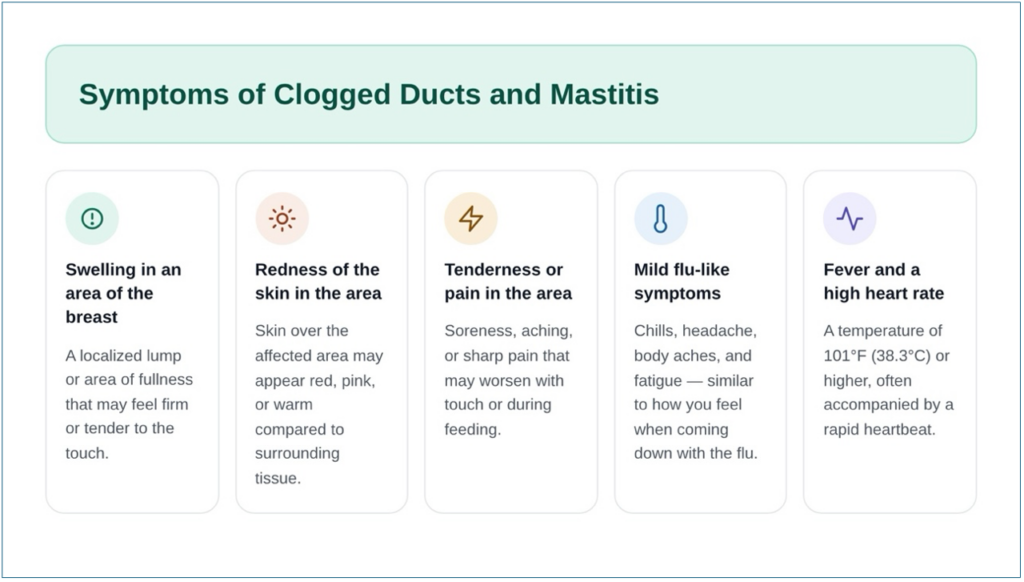
When part of the breast becomes swollen and irritated, there can be a variety of symptoms, depending on the duration and severity of swelling. Please see the following chart:
Why Do Clogged Ducts and Mastitis Happen?
Any situation where more milk is being made than removed can lead to inflammation in the breast or milk ducts. This can slow the flow of milk in that area and may lead to what people often call “clogs” or “plugs.”
Here are some common situations that can lead to mismatches:
- Overproduction of milk. Overproduction is when the amount of milk produced is more than the amount of milk needed. This can lead to more time when the breasts remain full, until the body can learn to produce less milk.
- A change in breastfeeding or pumping patterns. Transient areas of swelling can occur when babies start sleeping longer stretches overnight. Any change in the pattern of milk removal can cause a swelling and clogged ducts.
- Taking herbs or medications that increase milk production. If you are actively trying to increase milk production and you are experiencing clogged ducts, stop any herbs or medicines you are taking for this purpose until you are no longer having clogged ducts, and seek out the help of a lactation specialist or breastfeeding medicine physician to help you increase your production without developing problems.
- Ineffective or exclusive pumping. If your pump setup is not right for you (i.e. incorrect flange size, vacuum too weak, insufficient response to the pump, etc.), milk may not be removed well. Also, exclusive pumping requires significant guesswork regarding how often and how much to pump, leading to mismatches in milk production and removal.
- Using a nipple shield. A nipple shield may make it more difficult for the infant to remove milk well.
- Trauma to the breast. This could be anything from wearing an ill-fitting to aggressively trying to “massage out” a clog due to receiving inappropriate advice.
- Mammary Dysbiosis. This happens when the balance of bacteria in the breast is off, creating inflammation in the milk-producing tissue. Mammary dysbiosis can occur from taking antibiotics, exclusive pumping, and over production of milk.
How Do I Know What I Have?
It’s important to know that on-and-off breast swelling and inflammation are common in the first few months postpartum as your body adjusts milk production to match your baby’s needs. Most of the time, this is inflammation – not an infection – and it will improve within 2 to 3 days with the right care. If you’re not sure what’s going on, it’s always okay to reach out to your healthcare provider for help.
The table on the next page summarizes what to do based on symptoms. You can also find more details on the care of clogged ducts and mastitis in the IABLE handout titled “Caring for Clogged Ducts and Mastitis.”
Breaking Down the Mastitis Spectrum:
Clogged Duct
Symptoms:
- Swelling
- Possible mild redness
- Tenderness
Time Course:
- Typically resolves in 24–48 hours.
What to Do:
- Ice
- Gentle lymphatic massage of the area
- Pain medication (ibuprofen and/or acetaminophen)
- Nurse or pump according to your baby’s needs
- Do NOT aggressively massage the area
Inflammatory Mastitis
Symptoms:
- Swelling in an area of the breast
- Redness of the skin in the area
- Tenderness/pain in the area
- Fatigue and possibly mild flu-like symptoms
Time Course:
- Typically improves in 24 hours and resolves by 48 hours. If worsening at 24 hours, this may be infectious mastitis (see below)
What to Do:
- Ice
- Gentle lymphatic massage of the area
- Pain medication (ibuprofen and/or acetaminophen)
- Nurse or pump according to your baby’s needs
- Do NOT aggressively massage the area
Infectious Mastitis
Symptoms:
- Swelling in an area of the breast
- Redness of the skin in the area
- Tenderness/pain in the area
- Chills, headache, body aches, and fatigue (“flu-like” symptoms)
- Fever and a high heart rate
Time Course:
- Symptoms of inflammatory mastitis have worsened after 24 hours.
What to Do:
- Ice
- Gentle lymphatic massage of the area
- Pain medication (ibuprofen and/or acetaminophen)
- Nurse or pump according to your baby’s needs
- Do NOT aggressively massage the area
- See a physician or other provider for an evaluation – antibiotics may be needed
When to Call a Healthcare Professional
If you are following the recommendations above but the symptoms are not improving within about 24 hours, see a healthcare professional for an evaluation.