




UMMS – Creating a Breastfeeding Knowledgeable PICU
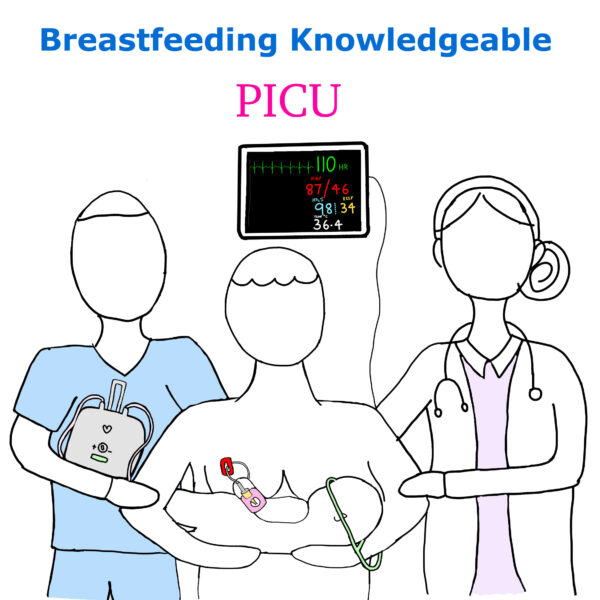
Studies show that infants who receive breastmilk in the NICU/PICU have fewer complications, shorter length of stay and decreased mortality. The most significant barrier in providing adequate breastfeeding support in the NICU/PICU is lack of breastfeeding knowledge and skills among health care professionals. Beyond the medicinal qualities of human milk, breastfeeding can be one of the few sources of normalcy, healing, and comfort for the child, parents and healthcare professionals.
Our patients need and deserve care based on clinical and research evidence to achieve their breastfeeding intentions.
This educational opportunity, created for the entire PICU team including physicians, advance care providers, dietitians, lactation consultants and pharmacists, is possible with generous support from the UMMS Pediatric Critical Care Improvement Grant* and the PICU Parent Family Advisory Council. We have partnered with IABLE, the Institute for the Advancement of Breastfeeding and Lactation Education, to develop evidence-based, clinically applicable educational courses.
There are 3 modules in this training:
- Basics of Breastfeeding Support for the NICU or PICU Dyad
- Case Presentation of a Breastfed Infant with Acute Respiratory Distress due to Respiratory Syncytial Virus (RSV) Infection
- A Mothers’ Recount Navigating the Health Care System through the Diagnosis and Treatment of her Child with HLHS (Hypoplastic Left Heart Syndrome)
Improving healthcare team knowledge and skills in breastfeeding support and management is a responsibility in fulfilling our mission of exceptional, compassionate, informed and supportive practices for patients and families.
As pioneers of this model of breastfeeding training, and to improve care, we are also studying the barriers and facilitators to breastfeeding practices in the PICU, where limited research and published guidance currently exist.
Click here to start this training program. After reviewing information about the research, you will be given the option to participate in the research project. We hope you will join in.
Contact us
Please feel free to contact us if you have questions.
FAQ
This FAQ was developed to support healthcare professionals participating in the UMMS Breastfeeding Knowledgeable PICU Training Program. We recognize that questions may arise regarding CEU eligibility, course requirements, and involvement in research. The responses below are designed to provide clarity and reinforce our collective mission to promote equitable, evidence-informed lactation care in pediatric critical care settings.
Who is this training designed for?
This training is intended for all healthcare professionals who engage in the care of critically ill infants and families in PICU settings. This includes, but is not limited to: physicians and advanced practice providers (MDs, DOs, NPs, PAs), nurses and nurse leaders, dietitians and nutrition support specialists, lactation consultants (IBCLCs, CLCs), pharmacists, respiratory therapists, social workers and care coordinators, and allied health professionals and trainees.
What continuing education credits are available
The Basics offers 2.0 CMEs and the RSV presentation offers 1.25 CMEs, for a total of 3.25 CMEs.
CEUs: According to the American Nurses Credentialing Center (ANCC), the continuing education hours approved by the AAFP and AMA PRA Category 1 Credits™ meet the requirement of formally approved continuing education hours and may be used as such for ANCC Certification renewal.
https://www.nursingworld.org/certification/faqs/
IBCLC: According to the International Board of Lactation Consultant Examiners® (IBLCE®) Individual CERPs Guide for Recertification, Section IIIA, education that has been awarded educational credit by another board or organization may be counted as CERPs. All IABLE courses both live and enduring are awarded continuing education credits. Each CME credit could be counted as one CERP. There is no limit to the number of CMEs that can be counted as CERPs.
How will I receive my educational credit certificate?
Once you complete a module, IABLE will issue a certificate of completion. This certificate can be submitted to your licensing boards or departmental education coordinators as needed.
Do I need to complete all three modules in order?
No, you can complete the modules in the order of your preference.
What happens if I chose to participate in the research study?
Healthcare professionals who opt into the research component will be asked to:
- Review and sign a digital consent form
- Complete a short pre-training survey assessing knowledge and confidence
- Complete a post-training survey following completion.
Is participation in the research mandatory?
Participation is completely voluntary. However, we encourage you to participate. As a healthcare professional, your insights and experience are instrumental in shaping future healthcare policies, clinical training frameworks, and institutional standards related to breastfeeding support in pediatric critical care.
Will my responses be confidential?
Yes. All research data will be deidentified and stored securely in accordance with IRB-approved research protocols.
How do I access the training?
You will be provided with a secure link to the course platform via your IABLE Account. Upon accessing the site, you will be asked to create a login and a passcode. If you encounter technical issues, please use the “Contact Us” form on the training homepage.
Where can I find supplementary learning tools?
This FAQ was developed to support healthcare professionals participating in the UMMS Breastfeeding Knowledgeable PICU Training Program. We recognize that questions may arise regarding CEU eligibility, course requirements, and involvement in research. The responses below are designed to provide clarity and reinforce our collective mission to promote equitable, evidence-informed lactation care in pediatric critical care settings.
Additional Resources
- Fitting pump flanges
- Manual expression of breastmilk
- Sandwich hold and asymmetric latch
- Paced bottle feeding (English or Spanish)
- Rolling out a flat nipple
*Pediatric Improvement Grant was funded by “Chip in for Children”, a 501c3 non-profit established and run by staff and families affiliated with the Pediatric Intensive Care Unit (PICU) at the University of Maryland Medical Center to raise funds dedicated to improving the patient and family experience within the PICU.